

Ayurveda is a traditional system of health and wellness that originated in India and has been practised for centuries. Today, Ayurvedic products are available in many forms, including herbal powders, tablets, capsules, oils and other preparations made with different ingredients.
For someone new to Ayurveda, choosing a product can feel confusing. There are many ingredients, product categories, brands and formulations to explore. Understanding what a product contains, how it is intended to be used and what its label says can help you make more informed purchasing decisions.
At Sitaram Anilkumar, established in 1994, customers can explore Ayurvedic products, traditional herbal ingredients and premium dry fruits. As a retailer, we offer products from established brands, including Vyas Pharmaceuticals and Lion Ayurvedic, alongside other available brands.
This beginner-friendly guide explains common Ayurvedic product categories, familiar traditional ingredients, what to check before buying and how to shop more carefully.
1. What Are Ayurvedic Products?
Ayurvedic products are preparations associated with Ayurveda, India's traditional system of health and wellness. Depending on the product, they may contain herbs, plant extracts, oils, minerals or combinations of ingredients. They are available in different forms to suit different purposes and methods of use.
Some products are traditionally used as part of Ayurvedic healthcare, while others are intended for external application or personal care. Their ingredients, directions and precautions vary, so it is important to understand the particular product rather than assuming all Ayurvedic products are alike.
When exploring Ayurvedic products, begin by identifying the product category, reading its ingredient list and checking the manufacturer's instructions. If you are considering an Ayurvedic medicine for a health concern, consult a qualified healthcare professional instead of relying on general online information.
2. Common Types of Ayurvedic Products
Ayurvedic products come in several forms. Understanding these categories can help you navigate an online catalogue and identify the type of product you are looking for.
Herbal powders
Herbal powders are made from processed plant materials and may contain a single ingredient or a blend of ingredients. The plant used, preparation method and intended use depend on the particular product.
Before purchasing a herbal powder, check its ingredient list, recommended use, storage instructions and any warnings provided on the packaging.
Tablets and capsules
Tablets and capsules are convenient formats for certain Ayurvedic formulations. They may contain one ingredient or a combination of ingredients in measured quantities.
Read the label carefully and follow the product-specific directions. Do not assume that two products with similar names or ingredients have the same formulation or dosage.
Ayurvedic oils
Ayurvedic oils are available for different external applications, including massage and personal-care routines. Their ingredients, application methods and precautions vary by formulation.
Before using an oil, review its label to confirm whether it is intended for external use, and follow any application and storage instructions.
Personal-care products
Some products inspired by traditional herbal practices are designed for hair care, skin care and everyday grooming. These may include soaps, oils and other topical preparations.
Check the full ingredient list, particularly if you have sensitive skin or known allergies. Follow the manufacturer's directions and discontinue use if an unwanted reaction occurs.
Herbal ingredients and raw herbs
Raw herbs and dried botanical ingredients are used in traditional preparations and may also be sold as individual products. Their identity, quality, storage requirements and intended applications differ.
Choose clearly labelled products from identifiable suppliers and avoid assuming that a natural ingredient is automatically suitable for everyone.
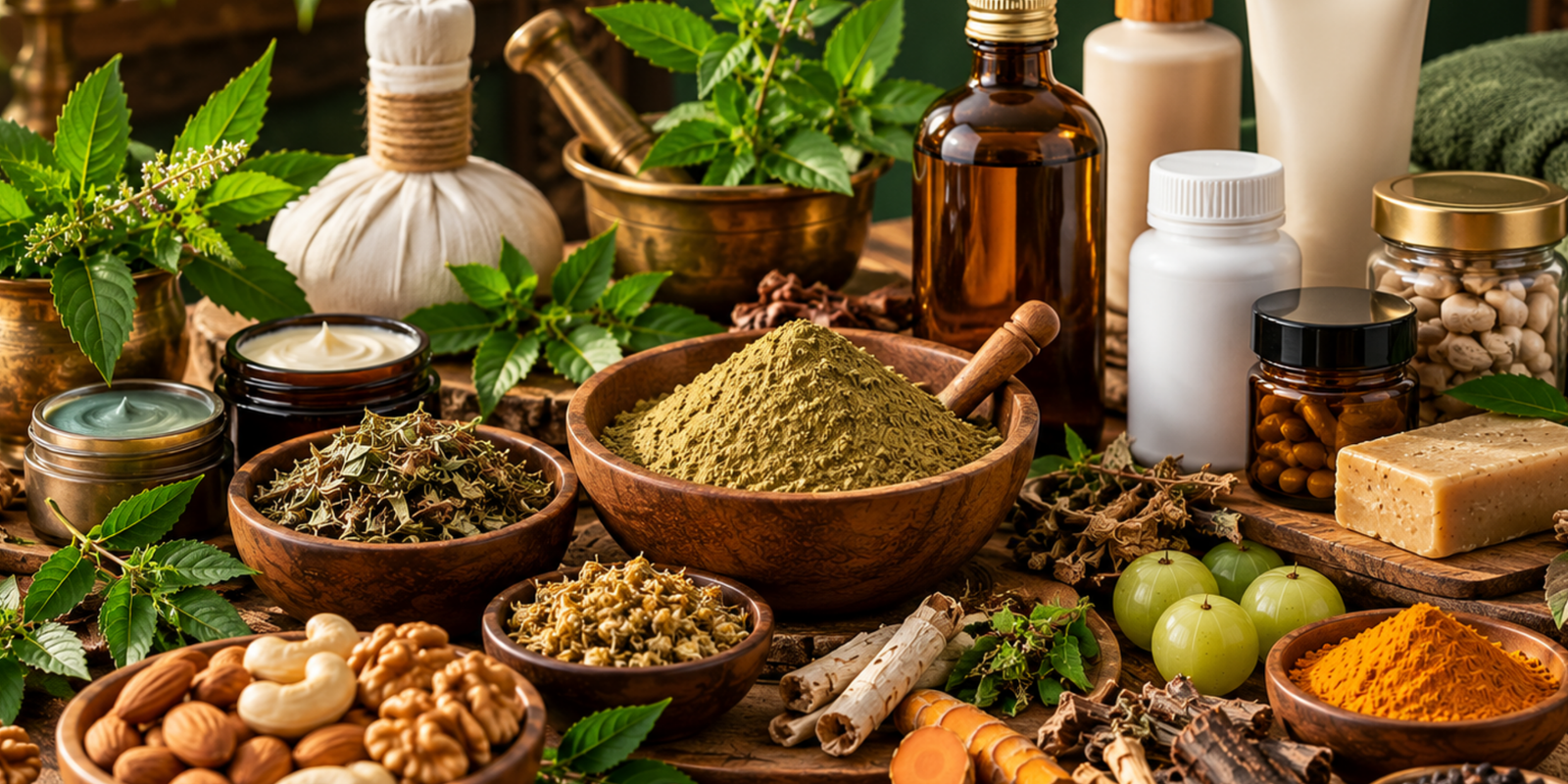
3. Popular Ayurvedic Herbs and Traditional Ingredients
Many Ayurvedic products contain familiar botanical ingredients. Their traditional uses and the available evidence differ, and the effect of a finished formulation cannot be determined from the name of one ingredient alone.
Here are a few ingredients that consumers may encounter when exploring Ayurvedic products.
Ashwagandha
Ashwagandha is a plant used in certain Ayurvedic preparations. It is often discussed in connection with traditional wellness practices and stress-related research. However, evidence varies by use, and the safety of a particular product depends on factors such as its formulation, dose and the individual using it.
Triphala
Triphala is a traditional combination of three fruits: amla, bibhitaki and haritaki. It appears in various Ayurvedic preparations. Products containing Triphala can differ in formulation and instructions, so check the exact product label rather than relying only on the ingredient name.
Amla
Amla, also known as Indian gooseberry, is used in traditional preparations and food products. It may be found in powders, extracts and other formulations. Check whether the product is a food ingredient, a supplement or a medicinal preparation, because the appropriate use may differ.
Neem
Neem is a botanical ingredient used in various traditional preparations and some personal-care products. The part of the plant used and the method of preparation can vary. Do not assume that a neem product intended for external application is suitable for consumption.
Turmeric
Turmeric is a familiar culinary spice and an ingredient in some traditional formulations. It can appear in food products, powders and formulated preparations. The intended use, concentration and precautions depend on the product.
Important: Traditional use does not, by itself, establish that an ingredient treats or prevents a medical condition. Research findings for one preparation should not automatically be applied to every product containing the same herb.
4. How to Choose the Right Ayurvedic Products
Choosing an Ayurvedic product should involve more than selecting an ingredient or attractive package. The product's formulation, intended use, source and directions all matter.
Use the following checklist when comparing products.
Check the ingredient list
Read the ingredients and identify the plant names or other substances included in the formulation. If the label does not provide enough information for you to understand the product, ask the retailer or manufacturer for clarification before purchasing.
Choose identifiable brands and suppliers
Look for clear manufacturer details, product information, batch identification where applicable, and appropriate licensing or registration details for the product category. Do not rely on advertising language alone as proof of quality.
At Sitaram Anilkumar, customers can explore products from Vyas Pharmaceuticals and Lion Ayurvedic, as well as other brands available in the store.
Understand the intended use
A herbal powder, topical oil, food ingredient and Ayurvedic medicine are not interchangeable. Confirm whether a product is intended for oral use, external application, food preparation or another specific purpose.
Read directions and precautions
Check the recommended use, warnings, storage requirements and expiry information. Never exceed the directions on the label or assume that a product is suitable for every age group or health condition.
Ask a professional when needed
If you are considering a product to address a health concern, seek guidance from a qualified healthcare professional. This is especially important if you are pregnant, breastfeeding, taking prescription medicines or managing an existing medical condition. Some herbal products can interact with medicines, and some Ayurvedic preparations may present additional safety concerns.
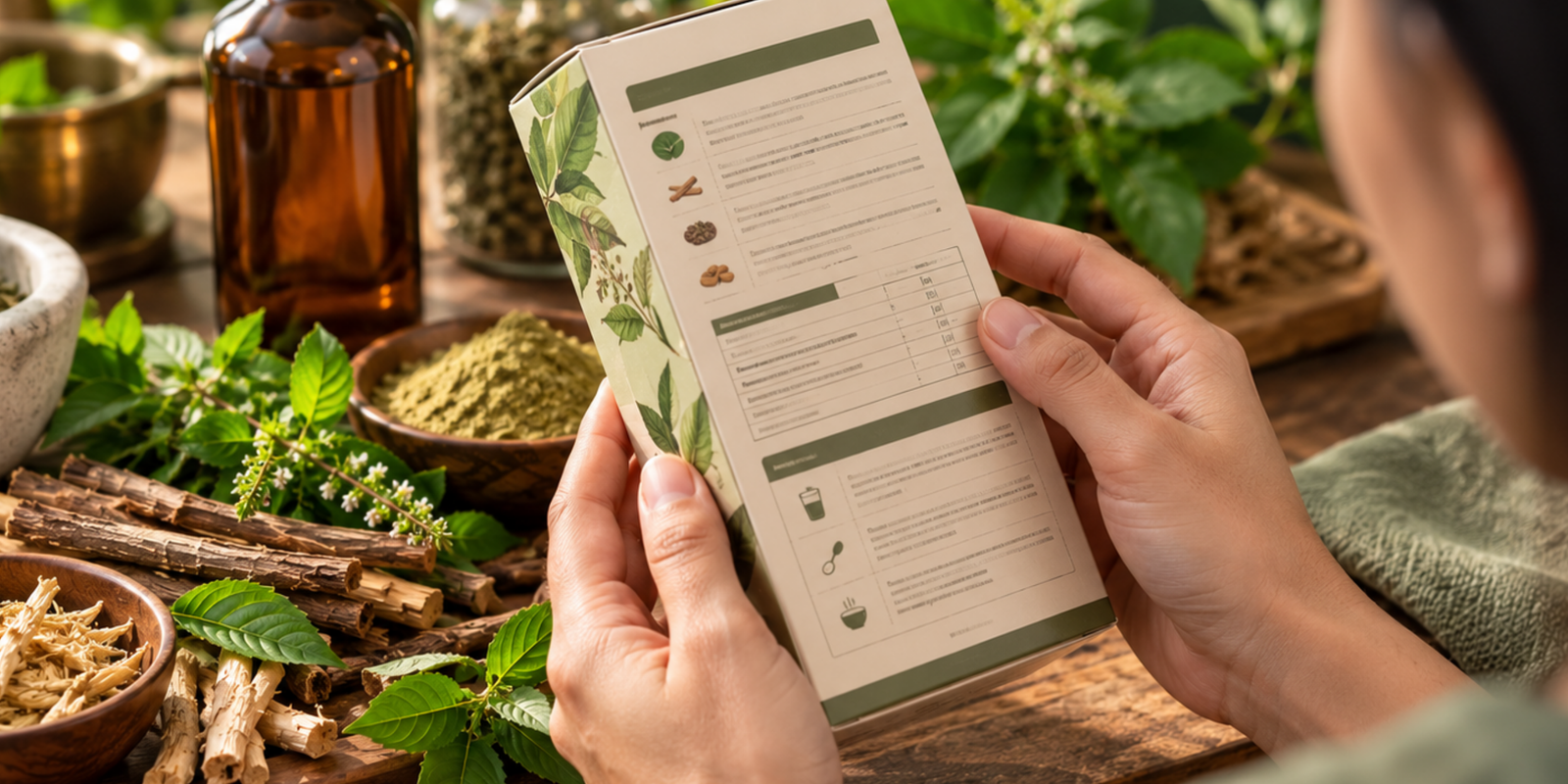
5. Ayurvedic Product Safety: What Beginners Should Know
Although many Ayurvedic products contain plant-based ingredients, natural does not automatically mean safe for every person. Product safety depends on the ingredients, preparation, amount used, quality controls and individual circumstances.
6. Where to Buy Ayurvedic Products Online in India
7. Frequently Asked Questions About Ayurvedic Products
Are all Ayurvedic products herbal?
No. Ayurvedic products can include plant-based ingredients and, depending on the formulation, other substances. Check the complete ingredient list and product description rather than assuming every product is made exclusively from herbs.
Can I take Ayurvedic products with other medicines?
Some herbal ingredients may interact with prescription or over-the-counter medicines. Consult a qualified healthcare professional before combining products, especially if you take regular medication.
How do I check the quality of an Ayurvedic product?
Review the manufacturer information, ingredient list, batch details, expiry date, directions and relevant licensing or registration information. Buy from identifiable sellers and seek clarification when product information is incomplete.
Can I buy Ayurvedic products online from Sitaram Anilkumar?
Sitaram Anilkumar is preparing to serve online customers across India, alongside its retail store in Haldwani. Product availability, shipping terms and ordering options should be checked on the live website before placing an order.